


This new Book Post section of This Itch of Writing celebrates books, from very old to very new, that I’ve enjoyed and hope writers will not only enjoy but find useful for their own writing. Click the link or the tab at the top of the page to explore the growing list. All the books are available at the Itch of Writing Bookshop at bookshop.org, which supports independent bookshops; the Itch also benefits directly from a small commission.
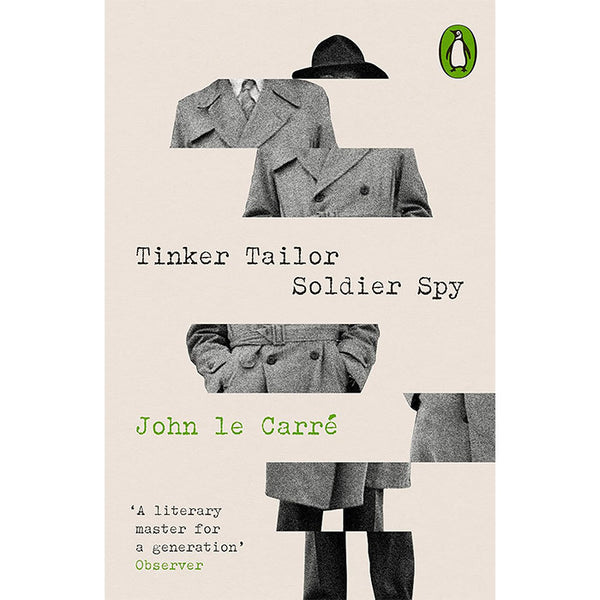
TINKER TAILOR SOLDIER SPY, by John le Carré
What is it?
1969, or thereabouts: a damaged man arrives at a run-down West Country prep school. A minor Secret Service thug, posted as a defector to Soviet Russia, turns up in at the house of the government’s chief minder of secret services - with a nightmare of a story about London Circus.
The only people who are – probably – sufficiently alienated from the new regime of London Circus to be trusted to investigate are George Smiley, the sacked, superannuated senior spy who lost his job thanks to that same nightmare, and Peter Guillam, the younger man who found in the Service the father and mother he lost, and doesn’t want to know that he’s been betrayed.
This post does contain PLOT SPOILERS so don’t read on if you’ve never seen either the classic TV series or the excellent film, nor read the novel, and would like to. BBC Radio 4 also produced a Complete George Smiley Radio Drama series of dramatisations, starring Simon Russell Beale, which I can’t recommend too highly.
Why I love it
If a cynic is a disappointed romantic, then le Carré’s take on the world is that of a cynic, but it’s always, in the end, about love: for friend, child, lover, colleague, Service, country, class or creed. Love is betrayed, or drives someone to betrayal, and fear is there too – and hope and hopelessness.
He has a shrewd gaze for the comedy and catastrophe caused by little empire-builders, creeps, absurdities, worshippers of ‘the Cousins’, and survivors-at-all-costs. Although I wouldn’t go to le Carré for an education in writing women, his are better-written than many of his contemporaries, while Smiley’s relationship with his wife is much more complicated and interesting (for the reader, that is) than the mere failing-marriage of your average thriller-hero.
The books also have all the non-fiction pleasures that I’ve written about à propos Dick Francis: making the reader feel we’ve been admitted to specialist knowledge of a very particular world, and in this case a deliciously secret one. The real secret world is no doubt more cheerful and more pragmatic than le Carré’s , but his is so fully-imagined, and the way it works so deftly touched in for the reader, that it feels utterly convincing. And, at his best, in le Carré there’s a gallantry in recognising that we will never win, but to give up trying would be worse.
Three reasons for a writer to read it
It’s an object lesson in how to make a compelling novel out of a story which is as much about the past as it is about the present: in how to keep a thriller moving when your protagonist is a short, fat spy well over retirement age, the ex-fieldman for whom in some senses, at some times, ‘the file is the only truth’. It might sound odd that his best plots remind me of Ibsen (but maybe not, since le Carré’s native heath is in many ways the Baltic): he starts the story as just enough soil has been scratched away from above a long-buried land-mine, that when the next careless person treads on it, it will blow up and take us all too. Oh, and the passages at the prep school are an object lesson in how to use an ‘inadequate focalisor’: they’re told largely through the viewpoint of a child, who sees everything but can’t analyse it.
Le Carré doesn’t get as much credit for his prose as he deserves. It’s subtle, easy to read in the best sense, and supple to his purpose, and he catches different voices brilliantly too. Le Carré himself is a wonderful reader of his own work, (he does some of his own audio-books) and it shows in the music of his prose. After Tinker Tailor the books do get longer, as he is more prepared to take time to explore ideas and intricacies, and develop the wider world and settings. You either like that or you don’t, but the recent success of The Night Manager shows how potent the best of his plots still are.
It’s a perfect demonstration of five-act structure. This is the barest summary, so you’ll have to trust me (or read the book) that all the protagonists do change in the pattern that John Yorke describes in Into the Woods, that the smaller plot-threads also explore love and betrayal, and it all knits together quite beautifully:
Act One – Mysterious Prideaux arrives to teach at a prep school. INCITING INCIDENT: Smiley is fetched by Guillam to hear Tarr say there’s a Russian mole in the Circus. Will Smiley come out of retirement and find the mole?
Act Two – TURNING POINT: Smiley accepts the commission. For a while all goes well: Smiley digs in the archives and interviews people, and Guillam works secretly inside the Circus, and find threads that lead in many directions. Someone is looking for Prideaux, and seems to be getting closer.
Act Three – Guillam gets warned off by the Centre: MIDPOINT: proof that someone at the Circus knows something, but now whatever Smiley & Guillam do they may give themselves away: the stakes have risen. Prideaux is found by Smiley and may have crucial proof.
Act Four – The two stories come together. Because of what Prideaux reveals, Smiley realises how the mole operates. But Prideaux disappears: will he wreck everything? They have to risk everything by turning someone at the heart of the Circus onto their side: a deliberately-caused, high-risk CRISIS which leads to
Act Five – TURNING POINT: They use that Circus insider and Tarr, to try to trigger the mole into revealing himself. Everything is at stake in the CLIMAX. Will it work? It does. Prideaux supplies the final resolution.