

Probably The Only Writing Resolution You'll Ever Need
And why it's wise to make it

Happy New Year! If you’re a supporter or subscriber to This Itch of Writing (and if you are, or click through to become one, heartfelt thanks from me!) you’ll know that here on the Itch we don’t really do writing tips, hair-shirt resolutions or anything else which seems to offers a quick fix for writing challenges.
My official reason is that resolutions are so often attempts to force yourself against your writerly grain - and I’m a great believer in going with your grain. And writing tips have a way of becoming writing rules, and - all together now! - there are no rules in writing, only tools, guidelines and rules-of-thumb.
The unofficial reason for not doing tips is that whenever I start trying to explain why a tip might be helpful - including when it might be absolutely and exactly what you should not do - it ends up as a full blog post.
Sure, this time last year I suggested a few things you might take up (as opposed to give up) to help your writing in the New Year. And back in the days of Twitter, a request for a writing tip did produce this post, which is unquestionably a super-useful guideline for the process of almost any kind of writing.
But these last few months of 2025 I seem to have been linking to this old post even more often than usual, so it seems time for an update.
I’m not sure whether it’s more of a good tip, or more of a helpful resolution, but now we’re at the end of this annual, out-of-the-ordinary, deregulated, madly busy or weirdly calm patch of time, it seems a good moment to put it out there en clair.
If you only take one thing away from the Itch, or from a workshop with me, I suggest it’s the motto Don’t Fiddle.
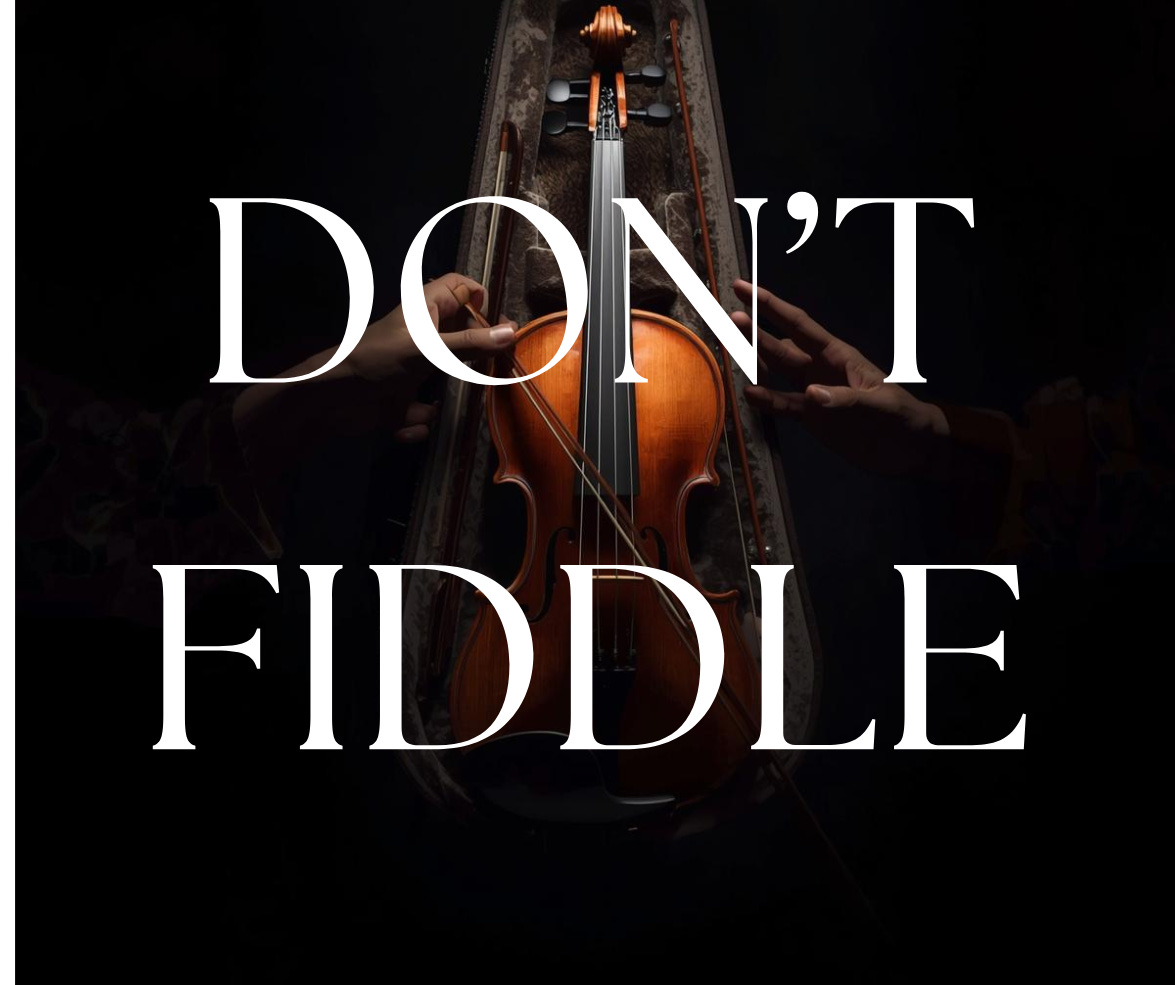
“Don’t Fiddle” means don’t
keep popping back into the file to see if what you’ve been worrying about really is as bad as you fear, and shows you’re a bad writer who will never get anywhere
keep popping back into the file to see if what you’ve been feeling confident about is as good as you hoped, and shows you’re a good writer who will get somewhere
keep popping back into a file just to relish what you’ve written
keep dipping in and changing a word here, a metaphor there, a name on the next page
tinker with some stuff to implement what a writing friend or mentor suggested about it
tinker with some stuff because the industry is saying that X sells or Y is box-office poison
tweak a word, sentence or character just because it occurs to you there’s an apparently better way to write that thing
tweak a word, sentence or character just because it occurs to you there’s a different way that thing needs to go
half-pursue the research for a subject but abandon a promising thread un-saved
take research material you’ve stumbled on and pop it into the scene or description
shoot off to do some research a section seems to need, and plop it straight onto the page
Don’t get me wrong: checking in with your fears and hopes, taking feedback on board, changing your mind about something, incorporating researched material, doing new research, and micro-editing are all excellent things to be working on. Even industry info, as I argued here, needs to be recognised and parsed at some point.
The big mistake is to do any of these things on the spur of the moment - especially with a drink in your hand or a live wound from recent feedback.
What’s wrong with fiddling?
In first drafting, it can be so much easier to fiddle with what you’ve written than actually add new words, scenes, chapters.
But only adding words will actually get the whole story written.
That’s not to say that you shouldn’t operate a write-edit cycle which is shorter than full-draft length: lots of writers write-edit each page, scene or chapter before moving on to the next.
The key is to work out what your cycle is, always to know where you are in it, and see that stage through before moving on.
Every time you open the file and read, you only get a short time of the text being fresh to your eyes: a brief moment when you’re reading ‘like a reader’, as if you don’t already know it.
If you keep popping in and out and reading bits, your eye becomes jaded: the words and events go dead to you, and you cease to be alive to them.
It’s foolish to squander that brief fresh-reading time on fiddling with things when you won’t be able to capitalise on it.
I realise that means that it’s unwise to pop back in just to relish some writing you’re really happy with as one of Jerusha Cowless’s correspondents wanted to. Sorry. The Itch is the last place to assert the Puritan conviction that anything you enjoy must be bad for you, but that freshness is too precious to waste - plus, what are the odds that, actually, you’ll end up fiddling?
When you dip into an existing draft from outside, you’re not connected to the larger arc and context of the story and your plans for the project, so you’re much less likely to do effective, coherent work.
On screen everything always looks perfect, so it’s even easier to lose track of what you’re up to.
You’re likely, therefore, to get in a muddle with what you’re doing.
You’re likely to make a good change, but not remember and deal with all the necessary preconditions, consequences, ramifications and distant effects that the change you’ve just made also requires.
You may pop in and change element* A to element B … but you’ve forgotten that you used B elsewhere to greater effect, which is why you needed A here. (* element as in, for example metaphor, pub name, minor character or setting)
You may flesh out a scene or character in the most fascinating way - maybe because you’ve just encountered something similar yourself? - but that then screws up the time-scale for the whole second half and two subplots to boot.
How to avoid fiddling
Not all of these work for everyone and the specifics of their writing life, but I do suggest adopting some of them as habits and general principles:
Keep a list of writing jobs of different size and types, as I suggested in my Betwixtmas post. That way, when you’re in a fiddling mood, you can pick a job which you’ve a good chance of being able to focus on and see through to the end.
Know what you’re planning to do when you sit down. In other words:
Don’t open the file at all, except when you have a clear idea of the work you’re going to do in the time available. Let’s call that Job A.
See that job through. However tempting it is, when you get bogged down or you realise something else needs fixing, to bob off and do something else, don’t. If you run out of time, jot down notes of what you would have done.
If you genuinely have to briefly check something elsewhere, don’t be lured into fiddling: make a note of what you spot over there, then leave and come back to Job A. More generally:
When you’re doing Job A, and that throws up other worries, tweaks or need for changes (let’s call those Job B), make a note and keep going with A. I can’t emphasise this enough. If you have to write a whole paragraph of notes explaining to Future You what B needs, then write it. It’s still far less trouble than Future You having to sort out the confusion you’ll cause by abandoning Job A halfway through now.
If Job B happens earlier in the novel than Job A, then make enough notes about B to get a sense of how it will end up being - and then go on with Job A as if you’d done Job B. You can always leave a note on Job A to check the two against each other when you get to the next-stage draft.
Trust yourself that if Job B needs doing, you’ll do it just as well another time from your notes - and maybe better.
If you fear losing heart halfway through Job A, put Track Changes on before you start, so you can revert everything if the changes get totally out of control. If what you’re planning is really drastic, do Job A on a new copy of the file. (This is one reason I used to work on separate files for each chapter in Word, and these days work in Scrivener.)
If you always find it really hard to stick to the Job As of writing and see them through, a little gentle curiosity about why that might be could be useful. What is it about seeing things through that is so hard? What fears does it bring up? What is so appealing about the Job Bs each time? What hopes does it raise? This post about The Other Novel might help you think this question through.
Once in a blue moon, changing jobs mid-session may be exactly right. Starting work on Job A may reveal that it’ll never be possible till you’ve done a particular piece of research, or figured out a different character or a crucial event. Check in with your Inner Editor that this isn’t just a case of distraction, procrastination or a disguised Inner Critic talking, make a note, and do what needs doing if it’s possible. Or put it aside, and consult your Writing Job List for what to do instead.
So why might this be the only writing resolution you’ll ever need?
OK, with that title my tongue was in my cheek: the hyperbolic egotism of social media is so easy and tempting to satirise. But in a way I did mean it.
I genuinely believe that when you get the writing process right for you and your project, what you produce will, almost by definition, be right: it will have its own logic and consistency, its own meaningfulness and coherence - and that meaningfulness will have grown out of your essential writing self.
So when your writerly diktat is Don’t Fiddle, you are urging yourself away from quick fix, sound-bite, elevator-pitch, tweet-based tweakery that responds to that moment’s sense of that aspect of your story… and towards a wider, fuller engagement with what your project is, and what you want to do with it. Only from that engagement can you trust that what you’re doing will enable your story to evolve into its own best self.
And Finally
Heaven knows, I am no saint or Dickens when it comes to writing process: I hate writing as often as the next writer grumping and tearing out what’s left of their hair over the WIP, I know all about procrastination, and I’m as capable of any writer of losing heart with a chapter and longing to bob off to write something sexier. And when the beast is finished, I’m as liable as any other writer either to send it out too soon because I’m desperate for it to be read, or to push commas around interminably around rather than grit my teeth and send it out at all.
But I can honestly say that for the last twenty-five years, I have never sat down to work on the current project without knowing why I was sitting down, and what I was planning to do while my bum was on that chair.
And when I’ve either finished that task or given up on it as unnecessary, I close the file, and don’t open it again until the next working session.
Good luck!
I agree with this so much! 👏👏👏
As ever, great actionable advice and something I will definitely keep in mind when I plan my next round of edits (when the feedback finally lands in my Inbox...). Thank you!